GRIPPING tightly on to the steel handle, my feet safely in the stirrups, and my heart in my mouth, I let myself be guided along the soft silky sand. I was riding a camel in the Mingsha sand dunes in Dunhuang (Taklamakan Desert), China, on a Silk Road tour. My mind travelled back in time: so this was what traders of yore endured as they traversed the desert, bringing silk, porcelain, tea and spice from remote parts of China to Europe.
The Silk Road, an
ancient international trade route between China and the Mediterranean, is aptly
named because silk was mainly traded. It was also a cultural bridge linking the
cultures of China, India, Persia, Arabia, Greece and Rome (Italy). A tour along
this route has fascinated many travellers. When a friend, Mr Choo Kok Wai, invited my
husband and I to join his group of friends on this challenging route for a
holiday, we gladly accepted.
Our journey of 18 days started from Kuala Lumpur to Shenzhen, with a connecting flight to Urumqi, our first stop. Thereafter, we flew to Kashgar, then travelled by bus to Turpan, passing through Aksu, Kucha and Korla. From Turpan, we took a train to Dunhuang, then a bus ride to historical Xian and finally flew back to Kuala Lumpur. The trip covered three provinces of China - Xinjiang, Gansu and Shaanxi.
 |
| Map of itinerary: Choo Kok Wai |
Choo, our tour leader and organizer, planned an intriguing itinerary that covered a variety of experiences for our group of 21 adventurers. We had a local Uyghur guide, Mr Abdullah Khaliq, who could speak his mother tongue, Mandarin and flawless English. He knew the history of Xinjiang (populated by ethnic groups like Uyghurs, Kazakhs and Tajiks) like the back of his hands, and he enthralled us with absorbing stories at every place.
Arriving in Urumqi, capital of Xinjiang, I was taken aback by the blend
of culture in the buildings. Our hotel had an interesting Moorish-Arabic influence.

A lavish welcome dinner, complete with a cultural show, exposed us to the ethnic culture. We enjoyed a variety of Xinjiang food – roast lamb, succulent mutton kebab, oxtail stew, sesame prawns, noodles in spicy soup and more.
 |
| mutton kebab |
 |
| noodles in spicy soup |
 |
| Sesame prawns |
 |
| Barbecued lamb |
A
Uyghur boy walking on a tightrope and gorgeous girls in vivid traditional costumes
dancing to Russian, Uyghur and Mongolian music, entertained us.

In the Xinjiang Museum, I was
enlightened by the folk customs and cultures of the 13 major ethnic groups of Xinjiang.
My first experience of seeing mummies three thousand years old, perfectly
preserved by the arid conditions of the Taklamakan Desert, gave me the creeps.
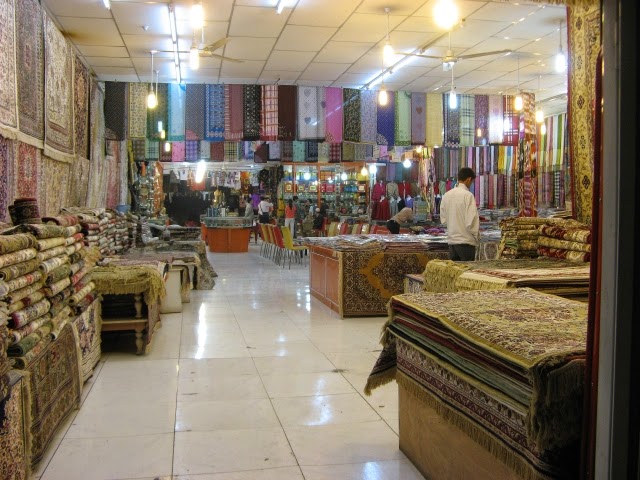
Next day, we visited the largest bazaar in the world,
The International Grand Bazaar, which had 3000 ethnic handicrafts shops. There
were so many things to see and buy, from silk, spices, nuts and dates, to
carpets, clothing and accessories. The almond nuts in shells that I bought were
fresh and crunchy, while the crispy sunflower-seed biscuits Abdullah bought had
us asking for more.

The deep-blue tranquil Heavenly
Lake in Tianshan Mountains (2000m), accessible by gondola lifts, was breath-taking.
We stayed overnight so that we could enjoy the picturesque lake and stay in an
authentic Kazakh yurt.
 | |||||||||||||||||||||||||||
| 21 adventurers in 7th Heaven - in front of Heavenly Lake |
We had dinner in a cosy carpeted
yurt. Kazakh girls served us wine and mao-tai.
This really warmed me up as I was feeling chilly.

As we savoured the side dishes, the main dish - a whole barbecued lamb, complete with head and hoofs - was brought in, amidst much cheer and laughter. Choo had the honour of getting the first bite.
 |
| Choo getting the first bite |
Kazakh girls in glittering traditional costumes sang and danced for us. To add to the merriment, many of us gamely joined them in the lively dancing. The Kazakh party gave us a glimpse of life in the past.
Sleeping in a yurt was a
bone-chilling experience. Eight of us were delegated to a yurt on a hill. It
was extremely cold (zero degrees Centigrade), without any central heating and it
was freezing, dark and windy outside. We had to walk down a stony 15-minute
path to use a 4-star warm toilet. Even with thermals, warm clothing, thick
mattresses and blankets, most of us had a sleepless night because of the cold
and the unfamiliar environment. But “the early dawn sight of the steely grey
lake and hovering, snow-streaked mountains as we stepped out of the yurt was a
mystical moment,” shared Ms Kala, one of the members.
Next morning, at Urumqi
airport, our flight to Kashgar was delayed by a sandstorm there. We waited a
whole day for updates on flights: we read, chatted and caught up on sleep but
finally had to spend the night in a hotel. It was our longest day in the
airport.
To make up for the
exhausting day, Abdullah arranged a sumptuous dinner for us – to celebrate his
teenaged son’s birthday together with a member who turned 70…a unique
Malaysian-Uyghur birthday celebration!
 | |||||||||||
|
We caught the 8 am flight to
Kashgar. On landing, we found the town hazy and dusty. Trees and bushes were
coated with a layer of fine brown sand. Visibility was poor and I found it
difficult to breathe. Some of us quickly donned masks for protection. We looked
more like bandits than tourists. It must have been tough for traders of ancient
times to travel in such harsh weather!
Kashgar, with the largest
Muslim community in China, was mesmerizing. We visited the largest mosque in
China, the Eidkah Mosque, which could accommodate 20,000 people. As ladies have
to cover their heads before entering, we all used our shawls and scarves to
cover our heads. That was photo opportunity for our cameramen – we enjoyed the
brief limelight!
 |
| In front of Eidkah Mosque |
 |
| The cheerful and obliging lady adventurers |
Strolling along the streets
near the Eidkah Mosque was like being whisked back in time. There were many
handicraft shops with men hard at work at their cottage industry. I watched
with interest workmen etching copper teapot and others drawing designs on
musical instruments.


Some unusual home furniture amused me - wooden baby cots
with a hole at the base - for draining babies’ urine?

The bustling Yapchan Tuesday Market (like Malaysia’s
pasar malam) gave me a glimpse of Uyghur’s business style. People
of mixed features (Chinese, Turk, Pakistani and Russian) were everywhere. The
variety of merchandise on sale was enormous – food, knives, clothes, silk, carpets,
accessories and even livestock like goats, cows, donkeys and camels! There was
an on-going auction of sheep and camels and bidding was done by hand signals.
The hive of activity – people shouting, bargaining, jostling, bidding – was a
dream come true for our photo enthusiasts.


From Kashgar, we travelled by bus along long lonely stretches, passing through mountains with sparse vegetation and no proper toilet in sight. The ladies will never forget the hunt for a bush or rock to answer nature’s call.
Enroute to Turpan, we stopped to view the ruins of Subash and Jiaohe ancient
cities; the Mystic Grand Canyon of Tianshan Mountain (Kucha), famed for its
striking red-brown sandstone landscape, a favourite movie making scenic spot of
China; and the Kizil Thousand-Buddha Grottoes (Kizil town) with well-preserved frescoes,
showing the development of Buddha cave art.
 |
| Subash Ancient City |
 |
| Mystic Grand Canyon |
 |
| Thousand Buddha Grotto |
In Turpan, we visited the Emin Mosque, with its monumental Minaret, the tallest in China. I found its sun-dried bricks arranged in 16 different geometrical floral patterns, an outstanding piece of art, totally different from those in other parts of the world.
 |
| Emin mosque |
A visit to the underground Karez irrigation system was an eye-opener for me. Karez systems of vertical wells, underground and above ground canals and small reservoirs, enabled many crops to grow in the arid desert. This irrigation system enriched the land and I was amazed to see crops like walnuts, dates, melons, wolfberries and grapes, growing in the Grape Valley.
 |
| Grapes galore |
We had a Uyghur lunch in a charming setting - a courtyard covered by grapevines - in a Tuyuq village. The hospitable owner, Kassim, plied us with fried noodles, samsa (baked buns), huge Xinjiang murukku and freshly-picked sweet seedless grapes.
 |
| Sweet seedless grapes |

Huge murukku
At another courtyard in the Grape Valley, a Uyghur farmer welcomed us
with sequined traditional caps for our heads, and freshly cut melons for our
thirsty mouths. He showed
us different varieties of raisins that could prevent certain illnesses. This
kindled our interests and thereafter most of us made purchases.
 |
| Different varieties of raisins |
We had a nail-biting experience travelling in a local night train to Dunhuang. We needed to get on and off the train within six minutes! Five porters helped to load 22 heavy bags on board in an organised manner. We disembarked at 4.30 am the next morning. In Dunhuang railway station, with no porters, we had to carry our own luggage up and down an overhead bridge that had no escalator!
The Mogao grottoes, created over nine dynasties (4th to 14th century) were like an art gallery in the desert. Of the 492 existing caves, we were allowed to view only a few. A guide took us to the main caves, to view the tallest, second tallest and reclining Buddha. Restoration work had been carried out and the paintings and sculptures looked fresh and striking.

Mogao grottoes
Riding a camel in the Mingsha Shan sand dunes, 5 km from the oasis town of Dunhuang, was a new experience. We rode on camels – each camel with a guide - in a line, up and down a hill. We all swooned over a crescent moon lake under the hill (a geological wonder) and many multi-coloured flowers growing in the desert.
 |
| A caravan of adventurers |
 | ||||
| Crescent-moon lake |

Multi-coloured flowers
Finally we were in Xian. I was thrilled to be at the qin Terracotta Warrior and Horses Museum. Having read so much about Emperor Qin Shi Huang's treasure trove, it was a privilege to be on site to see the terracotta army, all lined up in impressive battle formation.

Terracotta army
It was my lucky day too – farmer Yang Zhi Fa, discoverer of
the great archaeological site, was there to autograph my souvenir book.
 |
| Yang Zhi Fa signing souvenir books |
These are some of
the highlights of my Silk Road Adventure. Although we travelled long distances
and faced many challenges, we were never bored or tired because of the
diversity of experiences encountered. It was an adventure of a lifetime.
The Silk Road has it all – silk and spice with stimulating sights!